

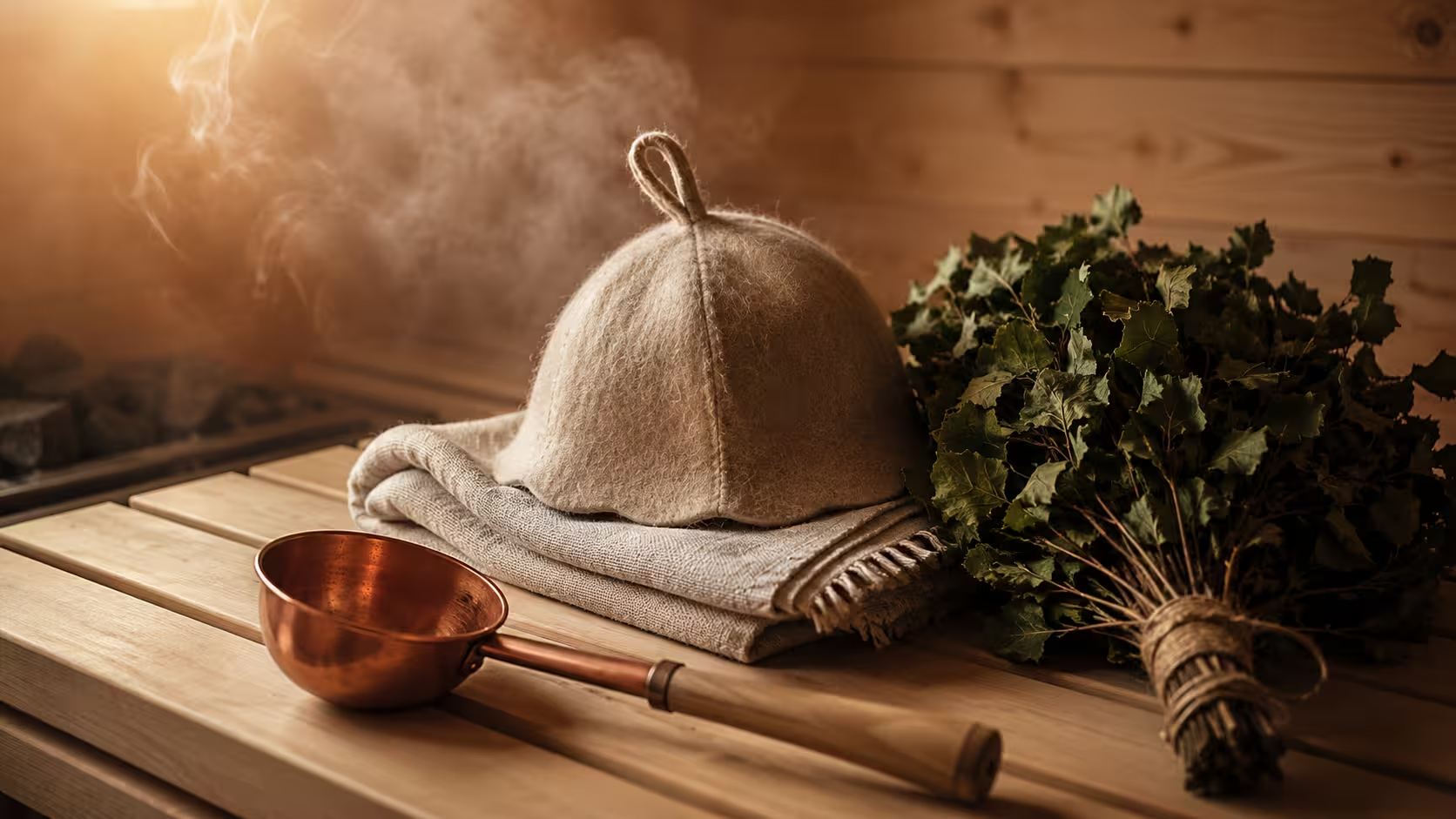
What to Wear in a Sauna?
- What you wear in a sauna depends on three factors: the type of sauna, the facility’s rules, and the regional culture. There is no single universal answer.
- In traditional Finnish and German saunas, nudity is the standard practice. A towel to sit on is the only required item.
- In North American gyms and co-ed spas, a swimsuit or towel wrap is typically expected. Choose cotton, linen, or merino wool and avoid synthetic fabrics entirely.
- Always sit on a clean towel, regardless of whether you are nude, wrapped, or wearing a swimsuit. This is the one non-negotiable rule worldwide.
- A sauna hat is the most overlooked yet most functional piece of sauna attire. It insulates your head from the hottest air layer near the ceiling (20–30°C hotter than bench level).
- Remove all metal jewelry, watches, and accessories before entering. Metal heats rapidly and can cause contact burns.
- The goal of sauna attire is to remove barriers between your body and the heat so your natural thermoregulation can function properly.
What is the Proper Attire for a Sauna Session?
What you wear in a sauna depends on the type of facility, regional customs, and whether the sauna is gender-segregated or co-ed. In traditional Finnish saunas, nudity is standard practice. In North American gyms and co-ed wellness centers, a swimsuit or towel wrap is the norm. The universal rule across all sauna cultures: always sit on a clean towel.
The purpose of sauna attire goes beyond modesty. It is about allowing your body to thermoregulate efficiently while maintaining hygiene for yourself and others. Minimal, breathable clothing (or none at all) lets your skin sweat freely, which is the body’s primary cooling mechanism during heat exposure.
This guide covers every scenario: what to wear in a traditional sauna, an infrared sauna, a gym sauna, and a luxury spa, including which materials perform best and which to avoid entirely.
What Is the Sauna Dress Code by Location?
Sauna dress codes vary significantly by country and facility type. In Finland, a country with approximately 3.3 million saunas for 5.5 million people, nudity is the cultural default and considered the most hygienic approach. In the United States and Canada, swimsuits are commonly required in public and co-ed settings.
| Location / Setting | Standard Attire | Notes |
|---|---|---|
| Finland (public sauna) | Nude + towel to sit on | Gender-segregated; swimsuits often discouraged |
| Russia (banya) | Nude or towel wrap + felt hat | Felt hats (shapka) nearly universal |
| Germany (Aufguss) | Nude + towel | Mixed-gender nudity is standard; swimsuits seen as unhygienic |
| North America (gym sauna) | Swimsuit or shorts + towel | Check facility rules; cotton or linen preferred |
| North America (luxury spa) | Towel wrap or robe | Often gender-separated; robes provided by facility |
| Infrared sauna (home) | Comfortable loose clothing or nude | Minimal attire maximizes infrared absorption |
Key principle: When in doubt, call the facility ahead of your visit and ask about their dress code. There is no embarrassment in being prepared.
Why Do People Wear Swimsuits in a Sauna?
People wear swimsuits in saunas primarily due to cultural modesty norms, facility rules, or personal comfort. Swimsuits do not improve the sauna experience. In fact, most traditional sauna cultures consider swimsuits unnecessary and potentially unhygienic, as synthetic fabrics trap sweat, harbor bacteria, and interfere with the skin’s ability to perspire efficiently.
In North America and parts of Asia, public saunas in gyms and wellness centers require swimsuits because the facilities are co-ed and culturally, nudity in shared spaces is uncommon. This is a social convention, not a thermal one.
If you do wear a swimsuit in a sauna, choose one made from natural fibers rather than synthetic materials. The ideal sauna swimsuit is loose-fitting, free of metal hardware, and made from cotton, linen, or a merino wool blend. Avoid nylon, polyester, and spandex because these fabrics trap heat against the skin and may release volatile compounds at elevated temperatures.
What Is the Best Material to Wear in a Sauna?
The best materials for sauna attire are natural fibers, specifically cotton, linen, and merino wool. These are breathable, moisture-wicking, and do not trap heat against the skin. Synthetic fabrics (polyester, nylon, spandex) restrict airflow, lose insulating balance when saturated, and can become uncomfortable or even unsafe in high-heat environments.
| Material | Breathability | Moisture Handling | Heat Tolerance | Sauna Suitability |
|---|---|---|---|---|
| Cotton | Excellent | Absorbs well; dries slowly | Good | Best all-round choice for clothing |
| Linen | Excellent | Absorbs well; dries quickly | Very Good | Lightweight and cool against skin |
| Merino Wool | Excellent | Absorbs 30% of weight without feeling wet | Excellent (tolerates up to 230°C) | Premium choice for hats and wraps |
| Wool Felt | Very Good | Very good moisture management | Excellent | Ideal for sauna hats due to dense insulation |
| Polyester | Poor | Traps sweat against skin | Poor; may off-gas | Avoid |
| Nylon / Spandex | Poor | Does not wick effectively | Poor | Avoid |
Bottom line: If you need to wear something, choose loose-fitting cotton or linen for your body and natural wool for your head. These materials work with your body’s thermoregulation rather than against it.
Why Do People Wear Hats in a Sauna?
People wear hats in a sauna because air temperature near the sauna ceiling is 20–30°C hotter than at bench level, and your head sits at the highest point, absorbing the most intense heat. A sauna hat made from thick natural wool creates a thermal barrier that slows heat transfer to the scalp, allowing you to stay in the sauna longer and more comfortably.
This is not a fashion statement. Sauna hats are functional heat protection tools with roots stretching back centuries in Finnish and Russian bathing traditions. In a typical Finnish sauna operating at 80–100°C (175–212°F), the temperature differential between your feet and the top of your unprotected head can exceed 30°C. A wool sauna hat reduces this thermal stress on the brain, scalp, and ears.
Wool fiber has a thermal conductivity of approximately 0.04 W/(m·K), comparable to commercial building insulation. It can also absorb up to 30% of its own weight in moisture without losing insulating capacity. No synthetic material matches this combination of properties in a high-heat, high-humidity environment.
For a complete guide to sauna hat science, benefits, and history, read: What Is a Sauna Hat? The Complete Beginner’s Guide.
How Do You Choose the Best Sauna Hat?
Choosing the right sauna hat depends on how frequently you sauna, how sensitive your skin is, and whether you prefer a structured or relaxed fit. All three common sauna hat materials (wool felt, standard wool, and merino wool) outperform synthetics in heat resistance and breathability.
- For frequent users who want lasting structure: The Wool Felt Sauna Hat is built from dense natural felt that holds its shape session after session. This is the most durable option, designed for bathers who sauna 3+ times per week.
- For a relaxed, casual fit with premium insulation: The Premium Wool Bucket Hat delivers the same thermal protection in a softer silhouette. It sits comfortably without feeling rigid, making it well-suited to bathers who prefer a natural, laid-back aesthetic.
- For sensitive skin or daily sauna use: The Merino Wool Sauna Hat uses ultra-fine merino fiber (15–19 microns) that is noticeably softer and less scratchy than standard wool. Ideal for long sessions where comfort is the priority.
Fit guideline: A sauna hat should cover the crown of your head and your ears, sitting snugly enough to stay in place when you tilt your head. Wool softens and conforms to your head shape within 3–5 uses.
What Are the Essential Sauna Etiquette Rules?
Sauna etiquette follows a few universal principles regardless of location: shower before entering, sit on a towel, keep the space quiet, and respect others’ comfort levels. These rules have been standard practice in Finnish sauna culture, which is recognized by UNESCO as Intangible Cultural Heritage, for centuries.
Before entering:
- Shower thoroughly with soap to remove lotions, perfumes, and contaminants
- Remove all metal jewelry, watches, and accessories (metal heats rapidly and burns skin)
- Bring a clean towel to sit on, as this is the single most important etiquette rule worldwide
- Put on your sauna hat before stepping in, not after
During your session:
- Keep conversation quiet and respectful because the sauna is a meditative space
- Ask before pouring water on the stones (löyly) since not everyone wants increased humidity
- Stay on the lower benches if you are new to sauna bathing; move higher as you acclimate
- Hydrate properly by drinking approximately 500ml of water before and after each session
After your session:
- Cool down gradually with a cold shower, plunge pool, or outdoor air
- Allow your body to return to baseline temperature before re-entering
- Air dry your towel and sauna hat; never leave them inside the sauna
For guidance on building a consistent sauna routine, see: How Often Should You Sauna? The Science-Backed Weekly Schedule.
What Should You Avoid Wearing in a Sauna?
Certain items are unsafe, unhygienic, or counterproductive in a sauna environment. Avoiding these common mistakes protects your skin, your health, and the sauna itself.
| Avoid | Why |
|---|---|
| Synthetic swimsuits (polyester, nylon, spandex) | Trap heat and sweat; restrict airflow; may release volatile compounds at high temperatures |
| Metal jewelry, watches, piercings | Metal conducts heat rapidly, and rings, necklaces, and earrings can cause contact burns within minutes |
| Gym clothes / workout gear | Heavy, sweat-soaked, and often synthetic; carry bacteria into the sauna |
| Tight-fitting clothing | Restricts circulation as blood vessels dilate; increases discomfort |
| Shoes or flip-flops inside the sauna | Unhygienic; rubber and synthetic soles may degrade in heat |
| Lotions, oils, or heavy fragrances | Create unpleasant odors in high heat; coat wooden benches; can irritate others |
| Cotton towel on your head (instead of a wool hat) | Cotton absorbs sweat rapidly, becomes heavy, and provides minimal thermal insulation compared to wool |
Key insight: The most common mistake is wearing too much. The sauna is designed for minimal barriers between your body and the heat. Your body’s natural sweating response is the cooling mechanism, and clothing that blocks it works against the purpose of the sauna.
What Should You Wear in an Infrared Sauna?
In an infrared sauna, wear comfortable, loose-fitting clothing made from natural fibers, or simply go without clothing entirely. Infrared saunas operate at lower air temperatures (50–65°C / 120–150°F) than traditional Finnish saunas, but the infrared panels emit radiant heat that penetrates the skin directly. Minimal clothing maximizes this infrared absorption.
For home infrared saunas, most bathers use a towel or go nude. For shared infrared sauna spaces, a loose cotton t-shirt and shorts or a linen wrap is appropriate.
Even in an infrared sauna, a wool sauna hat provides value. The radiant heat from overhead panels still affects exposed scalp and hair. A wool felt sauna hat or merino wool sauna hat shields the crown of your head from direct radiant energy, extending comfort without restricting infrared benefits to the rest of your body.
Can Sauna Use Help When You’re Getting Sick?
Moderate sauna sessions may support immune response during the early stages of a cold, but what you wear (or don’t wear) matters. The goal is to allow your body to sweat efficiently without overheating. Choose minimal clothing (or none) and always wear a sauna hat to protect your head from thermal extremes while your immune system is already under stress.
For a detailed evidence-based look at whether sauna use is safe during illness, read: Is a Sauna Good for a Cold? What Science Actually Says.
Important: If you have a fever, skip the sauna entirely. Your core body temperature is already elevated, and adding external heat places additional cardiovascular strain on your body.
Frequently Asked Questions
Yes, you can wear a swimsuit in a sauna, and in many North American and Asian facilities, swimsuits are required. However, choose a swimsuit made from natural fibers (cotton or a cotton-linen blend) rather than synthetic materials like polyester or nylon. Synthetic fabrics trap sweat, restrict airflow, and may release volatile compounds at high temperatures. In traditional Finnish and German saunas, swimsuits are often discouraged because they are considered less hygienic than bathing nude with a towel.
No. In a traditional Finnish sauna, nudity is the standard practice and is considered the most hygienic approach. Bathers shower before entering and sit on a clean towel. Finland’s sauna culture, recognized by UNESCO as Intangible Cultural Heritage, treats the sauna as a space of cleanliness and equality. Wearing clothing, particularly synthetic fabrics, is viewed as unnecessary and sometimes unhygienic.
The two most important items are a clean towel and water. The towel serves as your seat, protecting the wooden bench from sweat and maintaining hygiene for all users. Hydration is critical because you can lose 500ml or more of fluid through sweating during a single session. A sauna hat is the third essential, insulating your head from the hottest air layer in the sauna.
A wool sauna hat provides significantly better thermal insulation than a cotton towel because wool has a thermal conductivity of approximately 0.04 W/(m·K) and maintains its insulating properties when wet. Cotton absorbs moisture rapidly, becomes heavy, and loses its insulating capacity once saturated with sweat. Wool also naturally resists bacteria and odor, requiring far less frequent washing than cotton.
Topics
Crafted from 100% natural wool felt for thermal protection.

Written by
Erik Virtanen
Erik grew up with the sauna as a weekly ritual. He writes about heat therapy, Nordic wellness traditions, and the art of slowing down.
More from the Journal
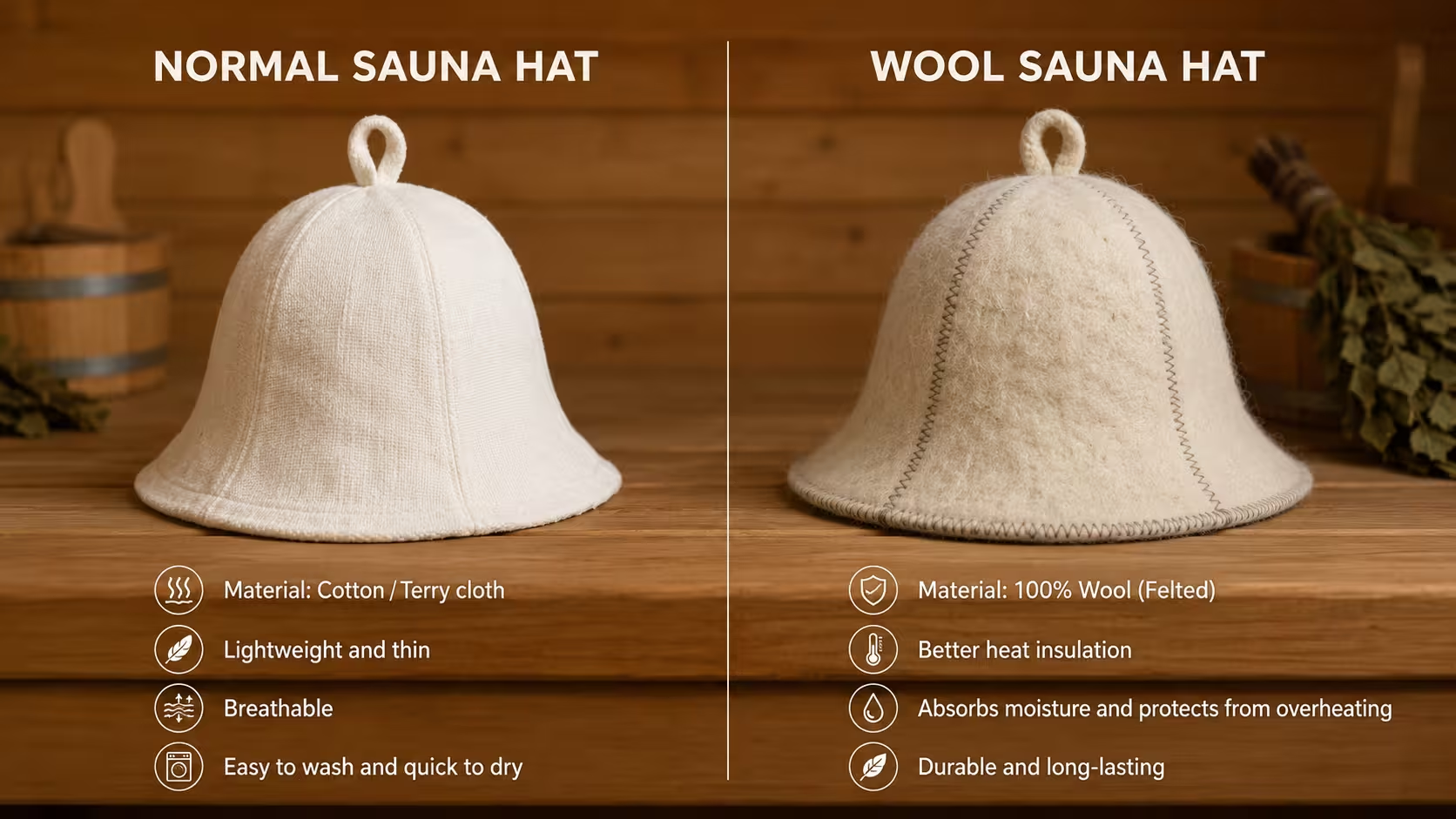
Wool Sauna Cap vs. Regular Sauna Hat: Is There a Difference?
Yes, a wool sauna cap differs substantially from a regular sauna hat. A wool sauna...

Sauna Etiquette 101: What to Do (and Never Do) in a Sauna
Sauna etiquette is the set of unwritten rules that ensure a safe, respectful, and deeply...

Can a Sauna Help You Lose Weight? The Honest Truth
Yes, a sauna can help you lose weight – but not in the way you...